There really can be only one Zappa/Mothers tune fit to kick off this Zappadan season:
"The rest of their lives in San Ber'dino."
Showing posts with label Zappadan. Show all posts
Showing posts with label Zappadan. Show all posts
04 December 2015


22 December 2011
Solstice!
I've been away without blogging for a week now. Visiting family in NC. Giftmas. Great weather, food, & family there. Horrible driving today—blinding rain. But we're all home and safe. I've been pretty much without access to the so-called "Information Superhighway," (other than on my portable, hand-held cellular device) so if I haven't commented at your place, it's not you, it's me.
A couple of things: Václav Havel, former DFH & president of Czechoslovakia, died this week. He was not only a politician but a playwright. He led a democratic movement to liberate the Czech people from the USSR and got thrown in the slammer for same. And, in keeping with the Zappadan theme of the last few posts, he was a lifelong fan of Frank Zappa. One of his first official acts as president was to invite Zappa to Czechoslovakia. Liberation, courage, democracy, thoughtful, (counter-) cultural literacy, Zappa, writing: don't know that much about him, but he sounds like my kind of guy.
Oh yeah, "dear" leader Kim Jong-Il died, too. Managed to catch the faux mourners, paid keeners, whore wailers, on the News. Twerp.
Take heart, all: from here on until June, here in the Northern Hemisphere, the days get longer and the nights shorter. Happy Solstice!
Again, sorry I missed the last days of Zappadan here. So, shut up 'n' play yr guitar—this is the indulgent, enduring, musical stuff that I just keep coming back to again and again:
[h/t to TheZappaDiscography over at the YouTubes. When I first starting posting during Zappadan a few years back, most of Z's stuff was unavailable on the internets.]
14 December 2011
Who Will Save Our Souls?
This is a momentous day:
Declaring a doctine of pre-emption, Bush claimed the right for the U.S. to invade any country anytime U.S. leaders perceive an imminent threat to U.S. national security. Many, even some in the military, believe this doctrine and the actions justified by it are in violation not only of "just war" theory but also international law. In other words, the war itself is a war crime.
As a result of the Bush/Cheney/Rumsfeld criminal push for war, 4,483 U.S. troops died in Iraq, 3,531 in combat. As well, official sources note 33,183 U.S. service -men and -women were wounded in Iraq. That number is disputed, and some believe it may be three times that many.
The number of Iraqi civilian dead cannot be reliably estimated, but, based on a study that appeared in the British medical journal Lancet, some have estimated the Iraq body count to be over one million. Official tallies fall way short of this number but are nonetheless substantial.
This is why President Obama's announcement today marking the official end of the war in Iraq is so momentous. It puts an official stop to this criminal war. It puts an official stop to the 'justified' wholesale killing of civilians.
But the costs of this war go beyond body counts. The direct economic costs of the war in Iraq, by most accounts, are well over $1 trillion. This does not include the costs of extra spending to care for veterans from combat through 2050, which may itself total over $1 trillion. Nor does it account for interest to be paid on funds borrowed to fund the war.
In 2008, Nobel laureate Joseph E. Stiglitz estimated the costs of the Iraq war at $3 trillion. He has since determined that estimate to be too low. As WoW pointed out at the time, that estimate did not include opportunity costs or what he calls "what if" costs:
And this gets to the final component of the costs of this war: the price of our souls. Primarily, the companies that profited from this war are those engaged in arms and weapons manufactury, those providing contractual paramilitary services, and those involved in oilfield services industry. These are the destructive angels of our nature—the killing business, the resource exploitation business. Then, of course, there's their bankers and financiers—the speculators and parasites. The Iraq war has made these folks the Masters of the Universe—or at least elevated their mastery to a whole new level.
We may be able to pay back the economic costs of this war, but it will take time and sacrifice. We might even be able to reclaim our collective souls from the destructive forces that currently have us in their clutches. Occupy, I'd say, is a good start. We can never, however, recover the lives lost, U.S. or Iraqi.
The costs in human lives, the economic and financial costs, and the costs to our soul as a civilization: let us hope that the end to this war can reverse this self-destructive trend and put us on the road to a more creative, healthy, and productive future.
Thank you, President Obama, for putting an end to this atrocity. Frankly, it's about time. I know it has taken a great deal of time and energy on your part. I know you have had to battle the entrenched, corrupt forces of militarism and bureaucratic inertia and war-profiteering to get to this point. But it was the right thing to do. The project now is to figure out how to pay for this disaster without sending the entire world into a further economic tailspin and, simultaneously, recover our wounded souls—the better angels of our nature.
-----
From Uncle Meat:
------
Now shut up 'n play ur guitar:
'President Barack Obama marked the end of the U.S. war in Iraq with a salute to American troops at a military base central to the fight and a pledge to support veterans who are returning home to face a difficult economy.
'As your commander in chief, and on behalf of a grateful nation, I'm proud to finally say these two words,' Obama told soldiers at Fort Bragg, North Carolina, home of the 82nd Airborne Division and the Army Special Operations Command. 'Welcome home.'
…
A promise to end the conflict in Iraq was a central element of Obama's campaign for the presidency in 2008. When he took office in January 2009, there were almost 150,000 troops in Iraq. That number has shrunk to less than 8,000 and the number of U.S. military bases in the country has fallen to five from 505. When the pullout is complete, the U.S. presence will be at the embassy in Baghdad, with an array of diplomats, military advisers and contractors.
'There is something profound about the end of a war that has lasted so long,' Obama told troops."Indeed there is. Former President George W. Bush, using a duplicitous and fraudulent Congressional authorization, invaded Iraq under false premises in March 2003. The bases for that authorization—that Iraq possessed weapons of mass destruction and maintained active links to al Qaeda making it a direct and imminent threat to the U.S.—were utterly false.
Declaring a doctine of pre-emption, Bush claimed the right for the U.S. to invade any country anytime U.S. leaders perceive an imminent threat to U.S. national security. Many, even some in the military, believe this doctrine and the actions justified by it are in violation not only of "just war" theory but also international law. In other words, the war itself is a war crime.
As a result of the Bush/Cheney/Rumsfeld criminal push for war, 4,483 U.S. troops died in Iraq, 3,531 in combat. As well, official sources note 33,183 U.S. service -men and -women were wounded in Iraq. That number is disputed, and some believe it may be three times that many.
The number of Iraqi civilian dead cannot be reliably estimated, but, based on a study that appeared in the British medical journal Lancet, some have estimated the Iraq body count to be over one million. Official tallies fall way short of this number but are nonetheless substantial.
This is why President Obama's announcement today marking the official end of the war in Iraq is so momentous. It puts an official stop to this criminal war. It puts an official stop to the 'justified' wholesale killing of civilians.
But the costs of this war go beyond body counts. The direct economic costs of the war in Iraq, by most accounts, are well over $1 trillion. This does not include the costs of extra spending to care for veterans from combat through 2050, which may itself total over $1 trillion. Nor does it account for interest to be paid on funds borrowed to fund the war.
In 2008, Nobel laureate Joseph E. Stiglitz estimated the costs of the Iraq war at $3 trillion. He has since determined that estimate to be too low. As WoW pointed out at the time, that estimate did not include opportunity costs or what he calls "what if" costs:
"two years on, it has become clear to us that our estimate did not capture what may have been the conflict's most sobering expenses: those in the category of "might have beens," or what economists call opportunity costs. For instance, many have wondered aloud whether, absent the Iraq invasion, we would still be stuck in Afghanistan. And this is not the only "what if" worth contemplating. We might also ask: If not for the war in Iraq, would oil prices have risen so rapidly? Would the federal debt be so high? Would the economic crisis have been so severe?
The answer to all four of these questions is probably no. The central lesson of economics is that resources -- including both money and attention -- are scarce. What was devoted to one theater, Iraq, was not available elsewhere."WoW's point was that if those funds squandered in destructive warfare had been put to creative use—investing, say, in green energy sources, shoring up Social Security, developing universal health care, seeding new, productive industries here and even abroad, reducing poverty worldwide, etc.—the potential return on those investments would have made a hugely positive contribution to the standard of living world-wide. Stiglitz, of course, notes that the financial crisis we are currently experiencing is almost certainly attributable to this war.
And this gets to the final component of the costs of this war: the price of our souls. Primarily, the companies that profited from this war are those engaged in arms and weapons manufactury, those providing contractual paramilitary services, and those involved in oilfield services industry. These are the destructive angels of our nature—the killing business, the resource exploitation business. Then, of course, there's their bankers and financiers—the speculators and parasites. The Iraq war has made these folks the Masters of the Universe—or at least elevated their mastery to a whole new level.
We may be able to pay back the economic costs of this war, but it will take time and sacrifice. We might even be able to reclaim our collective souls from the destructive forces that currently have us in their clutches. Occupy, I'd say, is a good start. We can never, however, recover the lives lost, U.S. or Iraqi.
The costs in human lives, the economic and financial costs, and the costs to our soul as a civilization: let us hope that the end to this war can reverse this self-destructive trend and put us on the road to a more creative, healthy, and productive future.
Thank you, President Obama, for putting an end to this atrocity. Frankly, it's about time. I know it has taken a great deal of time and energy on your part. I know you have had to battle the entrenched, corrupt forces of militarism and bureaucratic inertia and war-profiteering to get to this point. But it was the right thing to do. The project now is to figure out how to pay for this disaster without sending the entire world into a further economic tailspin and, simultaneously, recover our wounded souls—the better angels of our nature.
-----
From Uncle Meat:
------
Now shut up 'n play ur guitar:
08 December 2011
Sun, Sun, Sun: Here It Comes
I've been tracking this for years here @ WoW: the cost of photovoltaic solar energy is nearly on par with that of mainstream utilities. Here's why. First, the price of solar panels has plummeted.
"Since 2009, the cost has dropped 70 percent," says Pearce. But more than that, the assumptions used in previous studies have not given solar an even break.
"Historically, when comparing the economics of solar and conventional energy, people have been very conservative," says Pearce. To figure out the true cost of photovoltaic energy, analysts need to consider several variables, including the cost to install and maintain the system, finance charges, how long it lasts, and how much electricity it generates.
Pearce and his colleagues performed an exhaustive review of the previous studies and concluded that the values given those variables were out of whack. For example, most analyses assume that the productivity of solar panels will drop at an annual rate of 1 percent or more, a huge overestimation, according to Pearce.
"If you buy a top-of-the-line solar panel, it's much less, between 0.1 and 0.2 percent." In addition, "The price of solar equipment has been dropping, so you'd think that the older papers would have higher cost estimates," Pearce says. "That's not necessarily the case."Stated another way, we're not talking about any abstract "price discovery" here, even though a truly free market economics would demand it:
The price of solar energy-generated electricity, calculated by a legitimate levelized cost of energy (LCOE) method, is now competitive in many regions with the price of electricity generated by conventional sources.
To be clear, this review of solar photovoltaic LCOE is not one of those “if coal and nuclear paid for the real harm they do” analyses. It is a hard look at the actual numbers.And what's more, apparently the financial data are bearing this out:
Renewable energy is surpassing fossil fuels for the first time in new power-plant investments, shaking off setbacks from the financial crisis….
Electricity from the wind, sun, waves and biomass drew $187 billion last year compared with $157 billion for natural gas, oil and coal, according to calculations by Bloomberg New Energy Finance using the latest data. Accelerating installations of solar- and wind-power plants led to lower equipment prices, making clean energy more competitive with coal.
This from those DFHs over at the Bloomberg.

This is important. Lower priced energy correlates with higher productivity and, often, a higher standard of living—especially if the energy is not monopolized and Corporate is not skimming the profits created by increasingly higher productivity the way they have been over the last twenty years (h/t Occupy!). Think, for example, of cheap, portable desalination of water. Such a technology could stave off at least one future resource war, not to mention save the lives of peoples everywhere. And solar is not the only natural, renewable, abundant source of energy.
Though I do my level best to avoid them, metaphors abound. (h/t blogbud BDR, from whom I'm always stealing turns of phrase.)
Big Picture: Occupy! is not just about the U.S. middle class.
Big (down-the-road) Problem: How do we handle the additional heat thrown off by all this increased energy without cooking the planet?
οἱ οἱ οἱ
Time magazine has named Occupy Wall Street the story of the year. Yep. So what's happening? The DC occupistas are showing serious strategic savvy: they're taking it to K Street, lobbying central, the funnel through which Corporate money purchases its (non-)governance. It is the crucial supply line. And, in grand '60s-style street theater, they've occupied the U.S. Chamber of Commerce holiday party by rolling out the red carpet for the lobbyists' and their Corporate masters' arrivals. Check it:
Brilliant. Who says this generation is lacking in imagination?
On yet another front, occupistas are attempting to occupy unoccupied foreclosed-upon houses. Keep up with them here.
For οἱ πολλοί:
God bless us, every one.
06 December 2011
'Tis the Season
Once again, DFH's from the '60s and '70s have launched their yearly War on Christmas by interposing their ludicrously invented celebration of so-called Zappadan in honor of the 12/4 anniversary of the death of Frank Zappa. It runs until the 12/21 anniversary of his death. Each year, WoW runs some clips of the sorts of things these degenerates have chosen to venerate and, in so doing, detract from the annual feast of the birth of our Loud and Savior—more specifically, from its Advent-itious anticipation. This year promises to be no different. Thus:
Now fall down and worship, bitchez:
Now fall down and worship, bitchez:
14 December 2010
Breadcrumb Trail
Thanks to all of you for your votes in the 3QuarksDaily politics contest. Thanks to you, my post made the semi-finals but didn't qualify for the finals as determined by the site's editors. You guys are the best!
-----------
Here are FlowingData's 10 Best Data Visualization Projects for 2010. My favorite:
-----------
Did you know that Harvard scientists have reversed the aging process in mice. The process of aging is complicated, but boiled down:
-----------
Stories create us, not the other way around: "State-of-the-art neuro-imaging and cognitive neuropsychology both uphold the idea that we create our "selves" through narrative."
-----------
There's a socio-political component as well, according to George Lakoff. (Here also) Per the dominant narrative of the day, there are certain 'untellable truths' that simply do not enter the discourse, and we are the worse for it. What are these truths?
-----------
I can recall no time in the last nearly 40 years when I did not have a copy of this album in my collection. One of my favorite songs of all time (classical, jazz, blues, rock, pop, whatever) begins at 5:05 "Theme from Burnt Weeny Sandwich." Enjoy. Happy Zappadan to all!
-----------
Here are FlowingData's 10 Best Data Visualization Projects for 2010. My favorite:
Nature by Numbers from Cristóbal Vila on Vimeo. Fibonacci be praised.
-----------
Did you know that Harvard scientists have reversed the aging process in mice. The process of aging is complicated, but boiled down:
"The ageing process is poorly understood, but scientists know it is caused by many factors. Highly reactive particles called free radicals are made naturally in the body and cause damage to cells, while smoking, ultraviolet light and other environmental factors contribute to ageing.The problem with humans is that we don't function quite like mice. Raising telomerase levels in humans can dormant cause cancers to bloom as well. Still, a good diet of antioxidants can help nip those pesky free radicals in the bud.
The Harvard group focused on a process called telomere shortening. Most cells in the body contain 23 pairs of chromosomes, which carry our DNA. At the ends of each chromosome is a protective cap called a telomere. Each time a cell divides, the telomeres are snipped shorter, until eventually they stop working and the cell dies or goes into a suspended state called "senescence". The process is behind much of the wear and tear associated with ageing."
-----------
Stories create us, not the other way around: "State-of-the-art neuro-imaging and cognitive neuropsychology both uphold the idea that we create our "selves" through narrative."
-----------
There's a socio-political component as well, according to George Lakoff. (Here also) Per the dominant narrative of the day, there are certain 'untellable truths' that simply do not enter the discourse, and we are the worse for it. What are these truths?
"There is a Principle of Conservation of Government: If conservatives succeed in cutting government by the people for the public good, our lives will still be governed, but now by corporations. ...
The moral missions of government include the protection and empowerment of citizens. Protection includes health care, social security, safe food, consumer protection, environmental protection, job protection, etc. ...
The moral missions of government impose a distinction between necessities and services. Government has a moral mission to provide necessities: Adequate food, water, housing, transportation, education, infrastructure (roads and bridges, sewers, public buildings), medical care, care for elders, the disabled, environmental protection, food safety, clean air, and so on. Necessities should never be subordinated to private profit. ...
Services are very different; they start where necessities end. Private service industries exist to provide services — car rentals, parking lots, hair salons, gardening, painting, plumbing, fast food, auto repair, clothes cleaning, and so on. It is time to stop speaking of government “services” and speak instead of government providing necessities. ...
The market is supposed to be “efficient” at distributing goods and services, and sometimes, with appropriate competition, it is. But the market is most often inefficient at proving necessities, because every dollar that goes to profit is a dollar that does not go to necessities. ...
Public servant pensions have been earned. Public servants have taken lower salaries in return for better benefits later in life. They have earned those pensions through years of hard work at low salaries. ...
Education is a public good, not a private good. It benefits all of us to live in a country with educated people. ...
Huge discrepancies in wealth are a danger to democracy and a cause for major public alarm. ...
Tax “cuts,” “breaks,” and “loopholes” sound good (wouldn’t you like one?) even for super-wealthy individuals and corporations. What they really mean is that money is being transferred from poorer people to richer people: The poor and middle are giving money to the rich! Why? ...
Markets in a democracy have a fundamentally moral as well as economic function. Working people who produce goods and services are necessary for businesses and should be paid in line with profits and productivity. ...
Carbon-based fuels — oil, coal, natural gas — are deadly. They bring death to people and animals and destruction to nature. We are not paying for their true cost because they are being subsidized: tens of billions of dollars for naval protection of tankers, hundreds of billions for oil leases, hundreds of billions in destruction of nature, as in the Gulf of Mexico and Alaska coast. Death comes from the poisoning of air and water through pollution and natural gas frakking. And global warming pollution destroys nature itself...
What is called “school failure” is actually a failure of citizens to pay for and do what is needed for excellent schools...
Taxpayers pay for business perks. Because business can deduct the costs of doing business, taxpayers wind up paying a significant percentage of business write-offs — extravagant offices, business cars and jets, first-class and business-class flights, meetings at expensive lodges and spas, and so on. Businesses regularly rip off taxpayers through tax deductions. ...
The economic crisis and the ecological crisis are the same crisis. ...The causes of both are the same: Underestimation of risk. Privatization of profit. Socialization of Loss. ...
Low-paid immigrant workers make the lifestyles of the middle and upper classes possible."
-----------
I can recall no time in the last nearly 40 years when I did not have a copy of this album in my collection. One of my favorite songs of all time (classical, jazz, blues, rock, pop, whatever) begins at 5:05 "Theme from Burnt Weeny Sandwich." Enjoy. Happy Zappadan to all!
20 December 2009
Hope You Had a Shaggadelic Zappadan!
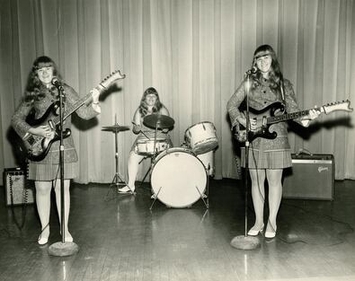
You can (and should) purchase their music at their own website here, or other commercial venues. But to get a sense of the band you really hafta' read their website.
11 December 2009
Son of Zappadan
We present one of the true 'high' priests of Zappadan. This guy never failed to clear the Elton John-, Bad Company-, Grateful Dead-, Kansas-, Peter Frampton-loving types out of my dorm room (that is when "Freak Out" or "We're Only in it for the Money" failed to do the trick), cement my cred, and still leave that sublime last minute just for my ears only.
08 December 2009
Of Cultural Historical Note
[Video Removed, but not exactly Censored]
In which Zappa is one of the least self-indulgent persons on stage for the full 24 minutes. Seriously, Yoko? Apparently, she didn't even know the words to "Sc*mbag" and had to be told. You know, people paid real money for this sort of jamming thing back then. What were we thinking? I mean, the blues thing was simple, easy to improv, and had a decent guitar break, but who was strangling that cat? Dayyum.
[h/t to BlckDgRd for the reminder about Lennon.]
Update: Okay, I'm having a bit of technical trouble embedding the video. Veoh is not as simple as YouTube. If you want to see this clip, either slide the side and bottom bars and press the play button above, or go here. Also, I apologize for the commercials: I mean, if any video was ever strictly non-commercial, this would seem to be one.
Further Update: That damned commercial starts automatically every time I open my blog. Forget it. I'm taking it down. Go to the site: http://www.veoh.com/browse/videos/category/music/watch/v8467343PNy5zAnz. There you can see John Lennon (the anniversary of whose murder is today) and Yoko Ono playing with Frank Zappa (whose Zappadan celebration we marked yesterday) and The Turtles, I mean the Mothers of Invention, at the Fillmore in 1971. It sucks, buts it's interesting and interestingly obscure.
As a consolation, here's FZ's take on what happened that night and subsequently:
Best,
Jim H.
In which Zappa is one of the least self-indulgent persons on stage for the full 24 minutes. Seriously, Yoko? Apparently, she didn't even know the words to "Sc*mbag" and had to be told. You know, people paid real money for this sort of jamming thing back then. What were we thinking? I mean, the blues thing was simple, easy to improv, and had a decent guitar break, but who was strangling that cat? Dayyum.
[h/t to BlckDgRd for the reminder about Lennon.]
Update: Okay, I'm having a bit of technical trouble embedding the video. Veoh is not as simple as YouTube. If you want to see this clip, either slide the side and bottom bars and press the play button above, or go here. Also, I apologize for the commercials: I mean, if any video was ever strictly non-commercial, this would seem to be one.
Further Update: That damned commercial starts automatically every time I open my blog. Forget it. I'm taking it down. Go to the site: http://www.veoh.com/browse/videos/category/music/watch/v8467343PNy5zAnz. There you can see John Lennon (the anniversary of whose murder is today) and Yoko Ono playing with Frank Zappa (whose Zappadan celebration we marked yesterday) and The Turtles, I mean the Mothers of Invention, at the Fillmore in 1971. It sucks, buts it's interesting and interestingly obscure.
As a consolation, here's FZ's take on what happened that night and subsequently:
Best,
Jim H.
07 December 2009
Happy Zappadan!
(h/t to Mitch at MFBlog for reminding us. Mitch has a competing post at 3QuarksDaily's contest. Read it.)
As I mentioned before: One of my readers—Frances Madeson—has nominated my Blunderbuss post for the 3QuarksDaily Politics Prize. Thanks, Frances. I am honored. And even if you disagreed with my opinion on the matter, I ask you to go over to 3QuarksDaily, read the nominated posts, and vote—preferably for me. The nominated posts are in alphabetical order, so mine is at the end. [I will append this message to all my posts until the voting deadline.]
Subscribe to:
Posts (Atom)