Showing posts with label A Sport and a Pastime. Show all posts

11 March 2008

Spoiler Alert

If you plan to read James Salter's novel A Sport and a Pastime and do not wish to know how it ends, then read no further. However, before I get to the spoilers, I will say this book is not linear. Knowing its ending before reading it detracts not one whit from its full enjoyment. In fact, it is on one's second reading that the book achieves a new depth.

Sport is filled with longing and sadness. Tristesse. It is the story of a privileged, Ivy League ne-er do well slumming through small-town France. It is the story of a simple shopgirl's giving of herself totally to a charismatic cad. It is the story of one man's failed attempt to plumb the sensuous and sensual truth of France (and, by extension, life) through the static lens of photography. It is the story of an ordinary man confronting his own fears and inadequacies and failures when he encounters an extraordinary one. It is a story of Eros and the failure of love. It is a story of facing one's own mortality. It is a story of the play of memory and imagination in fashioning reality and understanding another human being. It is a story of one person becoming conscious of the mind of another, slowly, incrementally, painfully. But what's more, it is a story that teaches the reader how to understand it.

The ending of the book is a text-book for novel endings, much the way Chekhov's endings are for the short story:
The sunlight of that icy morning falls on my face through enormous windows, through flats of glass with tiny flaws, purified by bitter, Sunday silence. The smoke floats blue in the cheap bars at dawn. The veterans cough. Nancy, where she was born, where she learned to write in that young, undistinguished hand:
...there is nothing that is not yours, all I think, all I am able to feel. I am embarrassed only that I do not know enough. But I don't care if you never belong to me, I only want to belong to you, just be hard with me, strict, but don't leave, just do like if you were with another girl—Please. I will die otherwise. I understand now that we can die of love.
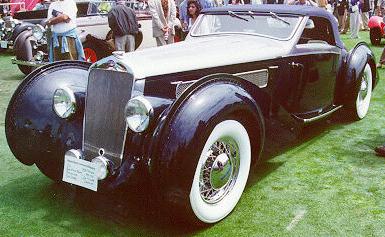
I receive a letter from his [Dean's] father, sent on to me in Paris, asking me to forward the personal effects. Cristina will take care of that, she says. I assure her there isn't much. As for the car, it's a curious thing—it's registered in the name of Pritchard, 16 bis rue Jan, and they know him. He's off in Greece for the summer, they think, but they'll handle that, too. Perhaps. It's parked under the trees near the house and locked, but like a very old man fading, it has already begun to crumble before one's eyes. The tires seem smooth. There are leaves fallen on the hood, the whitened roof. Around the wheels one can detect the first, faint discoloring of chrome. The leather inside, seen through windows which are themselves streaked blue, is dry and cracked. There it sits, this stilled machine, the electric clock on the dash ticking unheard, slowly draining the last of life. And one day the clock is wrong. The hands are frozen. It is ended.

Silence. A silence which comes over my life as well, I am not unwilling to express it. It is not the great squares of Europe that seem desolate to me, but the myriad small towns closed tight against the traveler, towns as still as the countryside itself. The shutters of the houses are all drawn. Only occasionally can one see the slimmest leak of light. The fields are becoming dark, the swallows shooting across them. I drive through these towns quickly. I am out of them before evening, before the neon of the cinemas comes on, before the lonely meals. I never spend the night.

But of course, in one sense, Dean never died—his existence is superior to such accidents. One must have heroes, which is to say, one must create them. And they become real through our envy, our devotion. It is we who give them their majesty, their power, which we ourselves could never possess. And in turn, they give some back. But they are mortal, these heroes, just as we are. They do not last forever. They fade. They vanish. They are surpassed, forgotten—one hears of them no more.

As for Anne-Marie, she lives in Troyes now, or did. She is married. I suppose there are children. They walk together on Sundays, the sunlight falling upon them. They visit friends, talk, go home in the evening, deep in the life we all agree is so greatly to be desired.

And that's it: "deep in the life we all agree is so greatly to be desired." Wow. Just WOW.

10 March 2008

Baseball?


Now that Spring Training is in full swing, I thought I would read a book that's been sitting on my shelf for several years entitled A Sport and a Pastime by James Salter. Boy was I in for a shock!

Seriously, Salter's Light Years is one of my favorite novels. It succeeds on so many levels I come back to it perennially for instruction in fictional, esp. narrative, technique. And Dusk and Other Stories is required reading for any serious practitioner.

Sport is like a cross between The Great Gatsby and Lady Chatterley's Lover: a sexual romp through France. It is pornographic, but it is beautiful porn. And it is not obscene, but frank and shocking in a Sixties sort of way. Once you get past the many explicitly imagined scenes of erotica—after awhile they become repetitive, and that is part of the point as the participants themselves burn out on their sexual adventures—and begin to examine the writerly technique, you can begin to appreciate Salter's mastery.

Sport is in the great tradition of Gatsby novels: a narrator (Nick Carraway and the unnamed narrator here) relates a tale of a passionate and, at the last, tragic affair of a larger-than-life figure (Gatsby and Phillip Dean here). Dean, who is a Yale drop out, hooks up (in the parlance of our times) with a beautiful, but simple, young, underclass Frenchgirl. He arrives out of the blue one day in the small, provincial town where the narrator is practicing his photography, driving a decadent old convertible. The narrator finds him highly romantic and heroic ("like the pull of a dark star"), especially because the narrator is so inept at sexual conquest. Watching Dean and Anne-Marie, or rather imagining them, is indeed a spectator sport.

However, nothing that happens in the narrative can be taken at face value and the narrator tells us that right off. He is reliably unreliable.
Certain things I remember exactly as they were. They are merely discolored a bit by time, like coins in the pocket of a forgotten suit. Most of the details, though, have long since been transformed or rearranged to bring others of them forward. Some, in fact, are obviously counterfeit; they are no less important. One alters the past to form the future. (Ch. 8)
and
I see myself as an agent provocateur or as a double agent, first on one side—that of truth—and then on the other, but between these, in the reversals, the sudden defections, one can easily forget allegiance entirely and feel only the deep, the profound joy of being beyond all codes, of being completely independent, criminal is the word. Like any agent, of course, I cannot divulge my sources. I can merely say that some things I saw myself, some I discovered, for after all, the mutilation, the delay of as little as a single word can reveal the existence of something worthy to be hidden, and I became obsessed with discovery, like the great detectives. I read every scrap of paper. I noted every detail.

Some things, as I say, I saw, some discovered, and some dreamed, and I can no longer differentiate between them. But my dreams are as important as anything I acquired by stealth. More important, because they are the intuitive in its purest state. Without them, facts are no more than a kind of debris, unstrung, like beads. The dreams are as true and manifest as the iron fences of France flashing black in the rain. More true, perhaps. They are the skeleton of all reality. (Ch. 9)

I've read no better, no more precise definition of the nature and art of fiction anywhere. This is the artist weighing in on the critical discussion (Wood, Robbe-Grillet, realism, etc) we've been engaged in for the past few weeks. It is theory. And, if the whole book were like this, it would be insufferably 'meta-'.

But, sandwiched between the two block quotes, Salter shows us just how it's done. The narrator and Dean drop off Anne-Marie at her flat: "This room—a squad of inspectors could never find it—in a narrow building. This room I am never to visit." Then, two paragraphs later, he gives the kind of description of the room and the two of them saying goodnight in the room you would expect of someone who closely observed the entire thing:
She stoops with the match, inserts it, and the heater softly explodes. A blue flame rushes across the jets, then burns with a steady sound. There's no other light in the room but this, which reflects from the floor. She stands up again. She drops the burnt match on the table and begins to arrange clothing on the grill of the heater, pajamas, spreading them out so they can be warmed. Dean helps her a bit. The silk, if it's that, is quite cold. And there, back from the Vox opposite the Citroen garage, its glass doors now closed, they stand in the roaring dark. In a fond, almost brotherly gesture, he puts his arms around her. They hardly know one another. She accepts it without a word, without a movement, and they wait in a pure silence, the faint sweetness of gas in the air. After a while she turns the pajamas over. Her back is towards him. In a single move she pulls off her sweater and then, reaching behind herself in that elbow-awkward way, unfastens her brassiere. Slowly he turns her around.

She leaves his kisses finally to stand against the wall, arms at her sides.

"Jeanne d'Arc," she says. The tremulous blue plays across her. Her features seem resigned.

He takes her by the arms. She turns her face to the light. He is her executioner, she says. The word thrills him. His knees tremble.

He puts her to bed in her warm pajamas. She is innocent, he decides. She smiles softly, the calm of a long convalescence in her face. Finally he turns to go, but at the door her voice stops him. Yes? Turn out the light, she says. He does. Like Lucifer, he creates darkness and he descends.
This is pure sensual and sensuous artistry. It does not pretend to be 'real'. We know it is imagined. Yet we are drawn wholly into the illusion because it appeals to nearly all our senses—except, oddly, taste (should there have been the salty lick of perspiration or the waxy sweetness of French lipstick? Who's to say?) The action is closely observed. The dialogue revealing in a way pedestrian conversation almost never can be. The emotion as tremulous as the reflection of the blue flame of the gas heater on the cheap shine of the wooden floorboards.

This is what fiction does that memoir cannot. It takes us closer than we might otherwise get. And it does so precisely in its direct appeal to our senses. Salter is not merely visual.

There is so much more to be said about this novel—its narrative development, its use of foreshadowing, the descent into sexual adventurism, the morality, etc.—but I will save those for other posts.