Showing posts with label Summertime. Show all posts

05 March 2010

Ur-story: Second Story Pt. 3

(cont'd from previous posts)

Summertime, J.M. Coetzee's latest work of fiction, presents the reader with a portrait of the absent character 'John Coetzee' (deceased) from a "range of independent perspectives"—none of which can lay claim to perfect reliability. J.M. Coetzee, the author, dispenses with the elements of traditional dramatic structure in favor of pastiche. Though he is able to achieve a coherent portrayal of this fictional 'John Coetzee'—who resembles in many ways, but not every way, the writer—it comes at the cost of plot.

For this maneuver to be more than mere gimmickry or the gamesmanship of a Nobel laureate who is entitled to publish whatever the hell he pleases because of who he is, something must be gained. What, if any, benefits does the work gain as a result of this trade-off?

[Side Note: In the Comments, long-time blogger and lit blog-friend Richard [Yo! la Crary {Tengo?}] of The Existence Machine, one of WoW's most influential reads, chides WoW for use of the term "metafictional games" w/r/t Summertime. He makes a good point, but not necessarily the one, I believe, he intends. I think there can be no question that J.M. Coetzee is engaging in some sort of gamesmanship here. Upon reflection, the games may not be precisely 'metafictional'; rather, they are metabiographical or metacritical games. Every other review I've seen, to the best of my memory, focuses on how J.M. Coetzee is commenting on the nature of how people read his books and how they look for episodes from his book in incidents from his biographical life and how he is attempting to set up his legacy. This is certainly a form of gamesmanship, and that stuff is all in Summertime. But I believe it is peripheral to the core of the book. [See infra]

Summertime never takes us into the emotional interior of John Coetzee; we always see him as others see him—except, presumably, in his notebook fragments. And they clue us into the emotional core of the book.

A quick recap:

The first entry shows us John Coetzee's father's disdain for the brutality of African politics: "He resolves the problem by immersing himself in the cricket scores. As a response to a moral dilemma it is feeble; yet is his own [John's] response—fits of rage and despair—any better?" p.5

The second deals with John's conflict over his own mortality: does one seek immortality by constructing a perfect concrete slab around "[t]he house that he shares with his father ... [though] [t]o insulate them from the damp is an impossible task" [p. 6] or "persist[-ing] in inscribing marks on paper, in the faint hope that people not yet born will take the trouble to decipher them?" [p. 7]

The third deals with a different type of patrimony: "Zoom lenses capture every intimate moment as they [Breytan Breytanbach, the ex-pat S.African writer back to visit his ailing parents, and his Vietnamese (that is to say 'colored' in the parlance of the times) wife] picnic with friends ... . Breyten calls Afrikaners a bastard people." [p.8-9]

The fourth is a response to a "stodgy bureaucrat's" pathetic plea in an early Kurosawa film. John [?] Coetzee wonders "[h]ow would he react if his father were to grip his arm like this." [p.9]

The fifth fragment deals with John Coetzee's refusal to provide expert testimony on behalf of a widow who seeks to lodge a ridiculous challenge her husband's clearly expressed last will and testament.

The sixth fragment contemplates the politics of the day: "The old rallying cries—Uphold white Christian civilization! Honour the sacrifices of the forefathers!—lack all force. ... How to live one's life outside politics, and one's death too: that was the example he [Jesus] set for his followers." [p.12]

In the seventh fragment, an old school chum, Truscott, moves into the house across from John. Though Truscott was a bit of an mediocre student, he now is a successful marketing executive while John is somewhat of a schlub. The irony is palpable. Truscott asks John: "'Do you have children?' 'I am a child. I mean, I live with my father. My father is getting on in years. He needs looking after. ...'" [p.14]

In the last fragment in the introductory section of the book, John points out the irony that the white suburbs of Capetown where he lives have grown out and swallowed up the land around the notorious Pollsmoor Prison, eventual home of Nelson Mandela.

In the series of undated fragments at the end of the book, he takes his father to a rugby game. His father is aging and has no friends, and "[c]lub rugby is on its last legs." [p. 246] John seeks his father's forgiveness for his emotional coldnesses of the past, but his father, a deeply unhappy man, does not recognize the effort—nor the need for it. "Theme to carry further: his father and why he lives with him. The reaction of the women in his life (bafflement)." He locates his sense of resistance to the world in his mother (one of the few times she is mentioned) and his Montessori education. Theme to be developed: "His attested incompetence in matters of the heart; transference in the classroom and his repeated failures to manage it." [p.255]. [Sounds vaguely like the set-up to Disgrace, no?] John helps his father, a disbarred lawyer, in a menial bookkeeping job. He imagines ways of committing suicide to escape the misery of his life. And he confronts the decision that has hovered over the entire book: his father contracts cancer of the larynx and John, finally, comes to this:
"It used to be that he, John had too little employment. Now that is about to change. Now he will have as much employment as he can handle, as much and more. He is going to have to abandon some of his personal projects and be a nurse. Alternatively, if he will not be a nurse, he must announce to his father: I cannot face the prospect of ministering to you day and night. I am going to abandon you. Goodbye. One or the other: there is no third way." [p.266]
John once abandoned his country and his father and went to America and is now returned. At the end of Summertime, John is facing a crisis: he has an ethical decision to make, a decision that goes to the heart of the theme of patrimony that threads through nearly every page of this book. It is a decision with such overwhelming impact, it is enshrined as one-tenth of the Laws that JHWH JHWH's Self actually enscribed on Moshe's stone tablets: "Honor your father and your mother, so that your days may be long in the land that the Lord your God is giving you." Indeed, as I pointed out in my first post in this series: this is the first relationship. It is the first of the Ten Commandments having to do with interpersonal relationships, coming after those having to do with honoring god himself (god, of course, being the great 'I am', the subject of the Ur-story).

It would be facile to state that John's father is, of course, a symbol, thus taking interpretation of Summertime down a sociological or political or ethnocentric alley. And J.M. Coetzee brilliantly controls all the symbolic meaning by means of the episodes he chooses to include in this book. But, because the relationship between an adult child and an aging parent is so fraught with emotional significance it is sufficient to indicate that this is the emotional, humanitarian heart of the book which all the various episodes serve to elaborate.

Thus, in answer to my question at the top of this post, J.M. Coetzee is able to achieve a certain systematic ramification of the theme of patrimony by focusing strictly on the relationship between John Coetzee and his father.

The five 'witnesses' to this relationship are not necessarily aware that this is the reality they are testifying to; they believe they are commenting on the writer John Coetzee they knew peripherally during the 1970s. But John's father is integral to all their accounts; they just don't know it. And neither, apparently, does Vincent.

From a technical, writerly standpoint, J.M. Coetzee, then, is also able to achieve a remarkable six unreliable narrators in one very post-modern pastiche. It is up to the individual reader to say whether it was worth the cost of the plot, and that would, most likely, depend on how hard the reader cares to work to mine the text. If the reader wants to be spoonfed meaning, then probably not.

One last point: Summertime finds J.M. Coetzee impersonating five different interviewees and one interviewer (plus John). This gives rise to another question, more nebulous and more difficult to answer: Is J.M. Coetzee dramatizing his own personal search for an authentic 'voice' in Summertime? This is a question I cannot answer. It entails a precise, systematic understanding of the nature of fictional 'voice'. It requires a fairly comprehensive knowledge of J.M.'s actual writing at the time—published and unpublished. And, most importantly, it demands a knowledge of what J.M. himself thought about his own writing and his sense of his own development as a writer, something I simply do not have access to. However, as you (I) (re-)read Summertime, it might pay to keep this thought in mind.

25 February 2010

Ur-story: Second Story Pt. 2

(cont'd from previous post)

Now, if you're one of those people who doesn't like to read critical reviews of books you haven't yet read because you don't like 'spoilers', rest easy; J.M. Coetzee's Summertime has no plot. There are no spoilers to give away. Please read on.

To recap from my previous post: Summertime is a fictional pastiche consisting of four transcripts and one narrative summary of interviews with acquaintances of as well as some fragments from the presumably authentic journal of one 'John Coetzee', deceased, all filtered through the prism of someone named Vincent who is compiling research for a biography of this same Nobel laureate 'John Coetzee' he hopes to write.

I've said here that J.M. Coetzee's novel "Disgrace is the most important and best novel I have read in the last quarter century." One of the reasons I so admire that novel has to do with J.M. Coetzee's masterful use of classical dramatic structure (reversal, rising action, climax, denouement) to achieve a profound thematic unity. It is formally perfect and thematically relevant and, thus, very satisfying both intellectually and emotionally.

J.M. Coetzee has eschewed these structural dramatic elements in Summertime in favor of this pastiche approach. There is no drama here. No plot.

Fine. What then of thematic coherence?

As I said before, Summertime is a series of voice exercises. By this I mean, we have J.M. Coetzee writing in the distinct voices of five different characters (six if you count the John Coetzee of the journals, and seven if you count Vincent the collator), each of whom illuminates some facet of the life of the fictional John Coetzee from 1971/2 until his first public recognition in 1977. The portrait of this character that emerges is fairly consistent: an awkward, introverted, private person; a failure of a son; a wan, ineffectual lover; a mediocre to competent academic; a stubborn Afrikaner wrestling with his patrimony; in short, a great writer who is not necessarily such a great man. All this amid the background of political unrest and social injustice in 1970s South Africa.

These incidents are told from the points of view of a liberal, female, middle-class South African therapist with whom John Coetzee had an affair; a female cousin whom John Coetzee once felt he loved; a Brazilian woman who suspects John Coetzee's interest in her is only because he has designs on her daughter; the male friend and colleague who beat John Coetzee out for a university teaching job; the Francophone lover and colleague with whom John Coetzee once taught a course on African literature; and finally (and most importantly) from the point of view of the biographer who wants to search for the sources of particular incidents in the novels of John Coetzee in his actual life even though he finds the personal writings of John Coetzee wholly unreliable.

In these various voices, we see a determined John Coetzee building a concrete apron around his modest home, so-called "Kaffir" labor considered unbefitting white Afrikaners of the time. We see a stubborn John Coetzee refusing to have a professional mechanic fix his car, so he and his cousin get stuck out in the middle of the veldt and have to spend the night in his car. We see an ineffectual John Coetzee pursuing the sensual Latina mother of one of his tutorial students staging a picnic which turns disastrous.  We see John Coetzee botching a university teaching job interview. We see an idealistic John Coetzee looking down on politics and failing to engage in the cultural battles of the war against Apartheid taking umbrage and then freezing up like Billy Budd at an interview with a literary magazine. And we see John Coetzee as a bit of an unreliable self-narrator:
"[Vincent:] Mme Denoel, I have been through the letters and diaries. What Coetzee writes there cannot be trusted, not as a factual record—not because he was a liar but because he was a fictioneer. In his letters he is making up a fiction of himself for his correspondents; in his diaries he is doing much the same for his own eyes, or perhaps for posterity. As documents they are valuable, of course, but if you want the truth you have to go behind the fictions they elaborate and hear from people who knew him directly in the flesh.

"[Sophie:] But what if we are all fictioneers, as you call Coetzee? What if we all continually make up the stories of our lives? Why should what I tell you about Coetzee be any worthier of credence than what he tells you himself?

"[Vincent:] Of course we are all fictioneers. I do not deny that. But which would you rather have: a set of independent reports from a range of independent perspectives, from which you can then try to synthesize a whole; or the massive, unitary self-projection comprised by his oeuvre? I know which I would prefer." 225-26
The themes of John Coetzee's unhappiness and, frankly, his incompetence at the two essential Freudian categories of work and love recur throughout Summertime, giving us a unified portrait of a man who seems ill-at-ease in the world and who, in effect and by nature, resists the world.

This world is not my home, I'm just a passing through...

[to be continued]

23 February 2010

Ur-story: Second Story

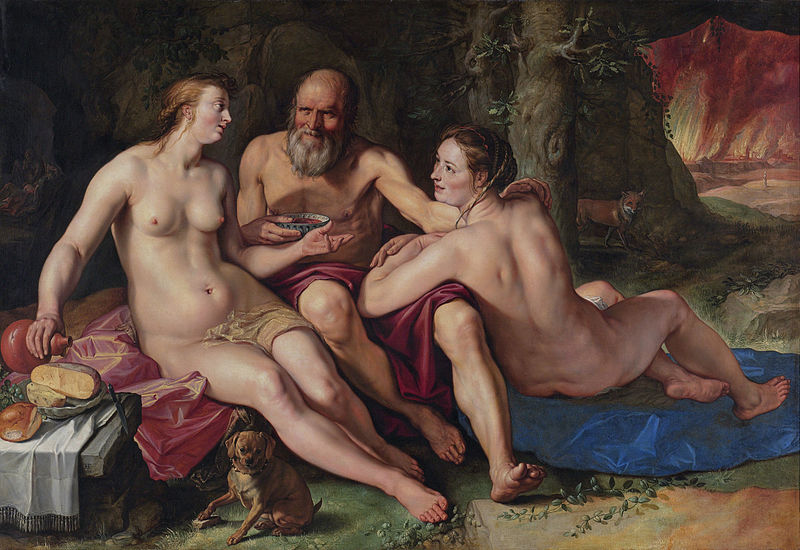
Patrimony, inheritance, birthright, tradition, legacy, heritage, incest, filiopietism, Oedipus complex, anxiety of influence: these are all ways (and there are many others) to express one of the major recurring themes in literature and fiction. Once we move beyond the lone individual struggling to understand reality, gain identity, deal with knowledge of mortality and grief, and establish a place in the world—the theme I have been exploring in my Ur-story series of posts—it is the first relationship, more primal even than love and mating. And it is a theme as ancient as Abram & Isaac (& Ishmael), and Lot's daughters; as central to our mythic self-understanding as Cronus & Zeus and Jahweh & Jesus; as profound as the aforementioned Oedipus and King Lear and Darwin & the apes; and as current as the new work by J.M. Coetzee, Summertime.

I rarely find myself reading, or having read, much less being in a position to comment on a novel that is au courant, but having just finished reading Summertime and seeing this reference to it on one of my favorite websites (h/t), I decided to pen a comment. There are plenty of reads on this enigmatic book out there (e.g., here, here, here, here, here, and here), and I'll try not to repeat any of them here. But none of them, to my mind, captures what I take to be the central theme of Summertime: one man's struggle to decide whether it is his duty to take care of his aging, ailing father and whether, if he cannot escape that duty, he is capable of doing so.

It is by no means an obvious theme because it is embedded in a pastiche of let us call them post-modern or metafictional literary techniques—the focus of most of the reviews I've seen. To understand how to read this book, it might be instructive to re-read my post here about William Gillespie's short book The Story That Teaches You How To Write It. The key is to pay attention to all the elements on the pages before you.

Thus, the American first edition of Summertime, the version I have, calls itself "Fiction" on its title page. We can, I think, safely take that at face value. Many of the reviewers spend valuable column space speculating on how much of the work is actually fictional and how much reliably autobiographical. As for me, I don't think it matters to an understanding of the book and, ultimately, am uninterested.

The confusion comes because the book—I'm not sure whether it can rightly be called a novel—is ostensibly about one "John Coetzee" who is said to be dead. For purposes of this post's clarity, I shall refer to the (dead) character in this fictional work as "John Coetzee" and the writer of this book as "J.M. Coetzee".

In my earlier Ur-story series of critical readings, I proposed a theory for understanding works of literature in terms of the essence of the story they sought to dramatize, that is to say the ways in which they dealt with the theme of confronting the human predicament of mortality and the accompanying sense of loss. On this theory, the story is a model of coming-to-consciousness emotionally. Summertime takes this essential understanding as its jumping-off place and goes on from there. J.M. Coetzee is using his own namesake, John Coetzee, as a character (though absent) in this book. John, like J.M., was a South African writer with a major literary reputation. Yet, in this book John Coetzee is dead.

Now one of the more difficult exercises for the writer of fiction is to give the reader a sense of a character through the eyes of the point-of-view character, the latter of whom is self-centered. Nick Carraway, for instance, is not what you might call self-centered. He is curious about and observant of his cousin Daisy and, of course, Gatsby. It is difficult to do because, as I've pointed out, much contemporary writing takes its cue from the 'method acting' school of drama; the writer doesn't merely impersonate, s/he takes on the aspect of the point of view character. And everything is about the self-discovery of the self-centered POV character; other characters tend to come across as stage props or furniture in the main character's world. James Wood, among others, famously calls this the free indirect style. I've called it 'method writing' (others have as well, e.g., see here, here, and here).

That is what J.M. Coetzee is attempting to do here, i.e., to give readers a sense of the fictional John Coetzee (and, importantly, his father) through the eyes of not one (arguably) but several point-of-view characters. Summertime consists of some notebook/journal fragments from John Coetzee and some transcripts of interviews and a narrative summary of another interview by one "Vincent", who is researching a biography of the late John Coetzee. Vincent apparently has taken some liberties with his transcriptions and summaries, and his interviewees often call him out on this. Thus Vincent's editorial control and thus his reliability are put at issue from the get-go.

So, let's call Vincent the Nick Carraway of Summertime and John Coetzee the not-so-great Gatsby.

Summertime is a compilation of Vincent's raw materials: interviews with five characters who knew John Coetzee (as presumably revealed in his journals) during the 1970s in South Africa and several of John's own notebook entries. Like the aforementioned Gillespie book, Summertime is thus a pastiche.

At first read it feels like J.M. Coetzee (the real life writer and Nobel laureate who has a world-wide following) has tried to pawn off a book written on the cheap (perhaps to fulfill a contractual obligation) by simply drawing on a few fragments from his own notebooks and some writerly exercises—to wit trying to imagine what some people (presumably with fictionalized identities) from his past might have thought about him—and cast the whole as a sort of po-mo, meta-fictional game by using the persona John Coetzee, having him be dead, and interjecting the fictional biographer. And that may very well be what this book is. But if it is merely gamesmanship, it is a sophisticated game and keeps the reader guessing. It does not readily betray its secrets.

But let's not cast aspersions on the writer's motivations. Let's take the text at face value, and examine it critically in terms of the sorts of things we look for in works of fiction. That is to say, let's treat it as the new form which, in the spirit of the game, it cries out to be.

(to be continued)