30 July 2010

Hiatus—Brief But Deep

For the next week or so, Wisdom of the West will be quiet. I'm taking my family on our annual scuba excursion.

I've left the front page here in reasonably tidy shape, meaning there's plenty to keep you busy until my return. I've put up some notable, influential (at least on me) quotes from Kierkegaard, Tillich, Freud, and John Rawls. For entertainment you can watch all six episodes of 'Fishing with John', one of my all-time favorite television shows. When I first saw it back in the early nineties, I couldn't actually believe it was on TV. It was so odd. Dry, deadpan humor, cool background music, nature, quirky people.(Well, looks like one of them jumped to page two. Click through if you want.) There's also an extended piece on politics and the war in Afghanistan. And some other stuff. Enjoy!

If that's not enough, here're the synopses of the 2010 Booker Prize long list nominees. 

And, by request, here's a story you might enjoy: "Harley in Beni".

(Gone) Fishing With John—Episodes 5 & 6 Dennis Hopper

"I made a mistake. John is still alive." "As always, night turns into day." "Lon has wooden legs but real feet." etc., etc.


R.I.P. Dennis Hopper

29 July 2010

Becoming Human

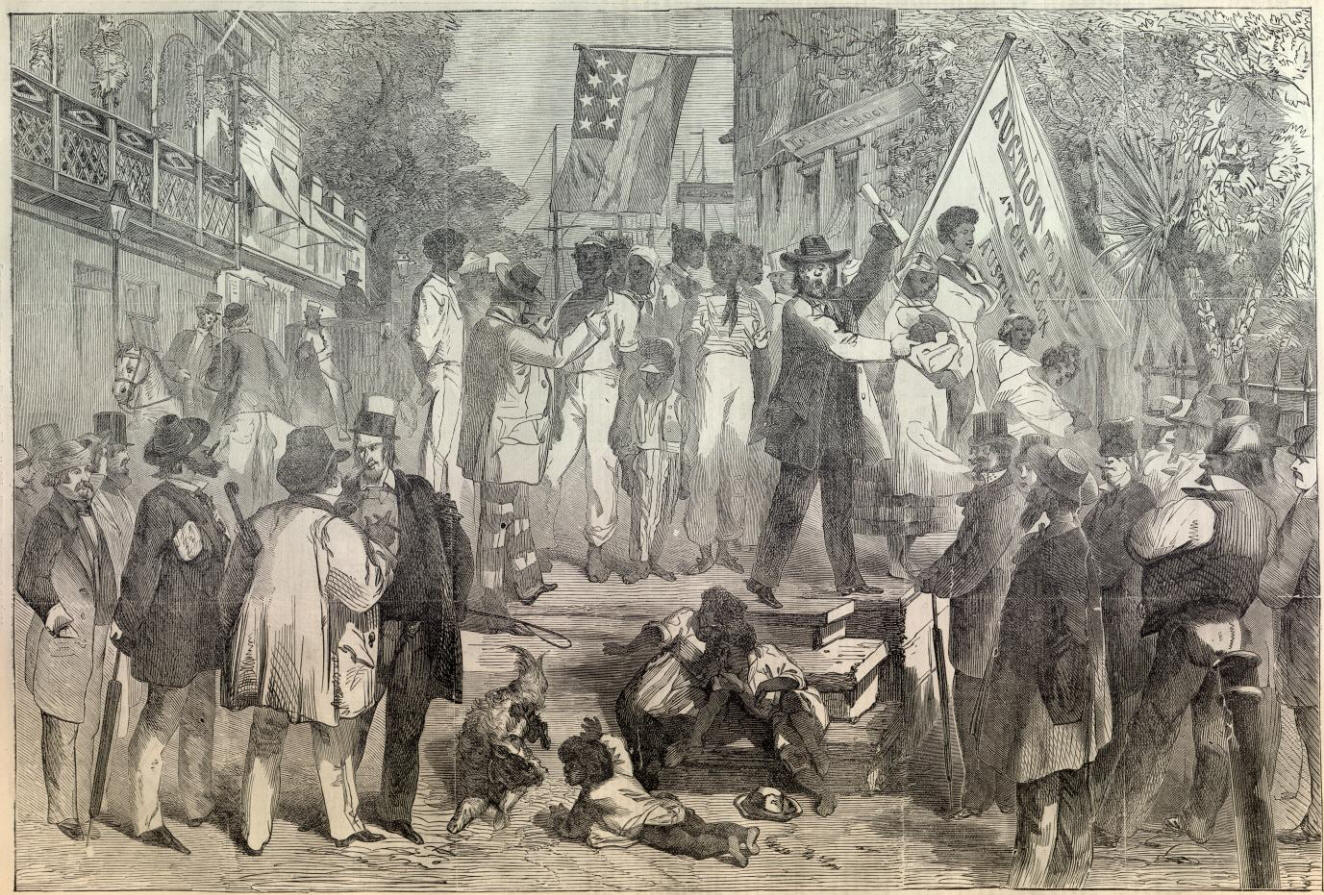
"The subjective existing thinker who has the infinite in his soul has it always, and for this reason his form is always negative. When it is the case that he actually reflects existentially the structure of existence in his own existence, he will always be precisely as negative as he is positive; for his positiveness consists in the continuous realization of the inwardness through which he becomes conscious of the negative. Among so-called negative thinkers, there are some who after having had a glimpse of the negative have relapsed into positiveness, and now go out into the world like town criers, to advertise, prescribe and offer for sale their beatific negative wisdom—and, of course, a result can quite well be announced through the town crier... . These town criers of negativity are not much wiser than the positive thinkers, and it is inconsistent of the latter to be so wroth with them, since they are essentially positive. They are not existing thinkers; once upon a time perhaps they were, until they found their result; but from that moment they no longer existed as thinkers, but as town criers and auctioneers.


But the genuine subjective existing thinker is always as negative as he is positive, and vice versa. He continues to be such as long as he exists, not once for all in a chimerical mediation. ... He is conscious of the negativity of the infinite in existence, and he constantly keeps the wound of the negative open, which in the bodily realm is sometimes the condition for a cure. The others let the would heal over and become positive; that is to say, they are deceived. ... He is therefore never a teacher but a learner; and since he is always just as negative as he is positive, he is always striving.

...

An existing individual is constantly in process of becoming; the actual existing subjective thinker constantly reproduces this existential situation in his thoughts, and translates all his thinking into terms of process. It is with the subjective thinker as it is with a writer and his style; for he only has a style who never has anything finished, but 'moves the waters of the language' [emphasis mine] every time he begins, so that the most common expression comes into being for him with the freshness of a new birth.

Thus constantly to be in process of becoming is the elusiveness that pertains to the infinite in existence. It is enough to bring a sensuous man to despair, for one always feels a need to have something finished and complete; but this desire does not come from the good, but needs to be renounced. The incessant becoming generates the uncertainty of the earthly life, where everything is uncertain. Every human being knows this, and at times gives it expression, especially on solemn occasions, and then not without tears and perspiration. He says it directly and stirs the emotions, both his and other people's—and shows in action what was already evident from the form of his utterance, that he does not understand what he says.*

[*What serves to mark the thoroughly cultivated personality is the degree to which the thinking in which he has his daily life has a dialectical character. To have one's daily life in the decisive dialectic of the infinite, and yet continue to live: this is both the art of life and its difficulty. Most men have complacent categories for their daily use, and resort to the categories of the infinite only upon solemn occasions; that is to say, they do not really have them. But to make use of the dialectic of the infinite in one's daily life, and to exist in this dialectic, is naturally the highest degree of strenuousness; and strenuous exertion is again needed to prevent the exercise from deceitfully luring one away from existence, instead of providing a training in existence. ...]

That the subjective existing thinker is as positive as he is negative, can also be expressed by saying that he is as sensitive to the comic as to the pathetic. ..." Johannes Climacus, Concluding Unscientific Postscript to the Philosophical Fragments 78-81 (trans. Swenson and Lowrie) (1846).

Gone (Fishing With) John—Episode 4 Willem Dafoe


(My personal favorite. Seriously, watch to the end for the punch line.)

26 July 2010

Is Culture Redeemable?

"Existentialism, in the largest sense is the protest against the spirit of industrial society within the framework of industrial society. The protest is directed against the position of man in the system of production and consumption of our society. Man is supposed to be the master of his world and of himself. But actually he has become a part of the reality he has created, an object among objects, a thing among things, a cog within a universal machine to which must adapt himself in order not to be smashed by it. But this adaptation makes him a means for ends which are means themselves, and in which an ultimate end is lacking. Out of this predicament of man in the industrial society the experiences of emptiness and meaninglessness, of dehumanization and estrangement have resulted. Man has ceased to encounter reality as meaningful. Reality in its ordinary forms and structures does not speak to him any longer.

One way out is that man restricts himself to a limited section of reality and defends it against the intrusion of the world into his castle. This is the neurotic way out which becomes psychotic if reality disappears completely. It involves subjection to the demands of culture and repression of the question of meaning. Or some may have the strength to take anxiety and meaninglessness courageously upon themselves and live creatively, expressing the predicament of the most sensitive people in our time in cultural production. It is the latter way to which we owe the artistic and philosophical works of culture in the first half of the 20th century. They are creative expressions of the destructive trends in contemporary culture. The great works of the visual arts, of music, of poetry, of literature, of architecture, of dance, of philosophy, show in their style both the encounter with non-being, and the strength which can stand this encounter and shape it creatively. Without this key, contemporary culture is a closed door. With this key, it can be understood as the revelation of man's predicament, both in the present world and in the world universally. This makes the protesting element in contemporary culture theologically significant." Paul Tillich, Theology of Culture (1959) 46-47

25 July 2010

Civilization and the Discontent of the Instincts


"We come upon a contention which is so astonishing that we must dwell upon it. This contention holds that what we call our civilization is largely responsible for our misery, and that we should be much happier if we gave it up and returned to primitive conditions. I call this contention astonishing because, in whatever way we may define the concept of civilization, it is a certain fact that all the things with which we seek to protect ourselves against the threats that emanate from the sources of suffering are part of that very civilization.

How has it happened that so many people have come to take up this strange attitude of hostility to civilization? I believe that the basis of it was a deep and long-standing dissatisfaction with the then existing state of civilization and that on that basis a condemnation of it was built up, occasioned by certain specific historical events. I think I know what the last and the last but one of those occasions were. I am not learned enough to trace the chain of them far back enough in the history of the human species; but a factor of this kind hostile to civilization must already have been at work in the victory of Christendom over the heathen religions. For it was very closely related to the low estimation put upon earthly life by the Christian doctrine. The last but one of these occasions was when the progress of voyages of discovery led to contact with primitive peoples and races. In consequence of insufficient observation and a mistaken view of their manners and customs, they appeared to Europeans to be leading a simple, happy life with few wants, a life such as was unattainable by their visitors with their superior civilization. Later experience has corrected some of those judgements. In many cases the observers had wrongly attributed to the absence of complicated cultural demands what was in fact due to the bounty of nature and the ease with which the major human needs were satisfied. The last occasion is especially familiar to us. It arose when people came to know about the mechanism of the neuroses, which threaten to undermine the modicum of happiness enjoyed by civilized men. It was discovered that a person becomes neurotic because he cannot tolerate the amount of frustration which society imposes on him in the service of its cultural ideals, and it was inferred from this that the abolition or reduction of those demands would result in a return to possibilities of happiness.

There is also an added factor of disappointment. During the last few generations mankind has made an extraordinary advance in the natural sciences and in their technical application and has established his control over nature in a way never before imagined. The single steps of this advance are common knowledge and it is unnecessary to enumerate them. Men are proud of those achievements, and have a right to be. But they seem to have observed that this newly-won power over space and time, this subjugation of the forces of nature, which is the fulfillment of a longing that goes back thousands of years, has not increased the amount of pleasurable satisfaction which they may expect from life and has not made them feel happier.

If the development of civilization has such a far-reaching similarity to the development of the individual and if it employs the same methods, may we not be justified in reaching the diagnosis that, under the influence of cultural urges, some civilizations, or some epochs of civilization possibly the whole of mankind have become 'neurotic'?"

...

"Men are not gentle, friendly creatures wishing for love, who simply defend themselves if they are attacked, but that a powerful measure of desire for aggression has to be reckoned as part of their instinctual endowment. The result is that their neighbour is to them not only a possible helper or sexual object, but also a temptation to them to gratify their aggressiveness on him, to exploit his capacity for work without recompense, to use him sexually without his consent, to seize his possessions, to humiliate him, to cause him pain, to torture and to kill him. Homo homini lupus; who has the courage to dispute it in the face of all the evidence in his own life and in history? This aggressive cruelty usually lies in wait for some provocation, or else it steps into the service of some other purpose, the aim of which might as well have been achieved by milder measures. In circumstances that favour it, when those forces in the mind which ordinarily inhibit it cease to operate, it also manifests itself spontaneously and reveals men as savage beasts to whom the thought of sparing their own kind is alien. Anyone who calls to mind the atrocities of the early migrations, of the invasion by the Huns or by the so-called Mongols under Jenghiz Khan and Tamurlane, of the sack of Jerusalem by the pious Crusaders, even indeed the horrors of the last world-war, will have to bow his head humbly before the truth of this view of man.

The existence of this tendency to aggression which we can detect in ourselves and rightly presume to be present in others is the factor that disturbs our relations with our neighbours and makes it necessary for culture to institute its high demands. Civilized society is perpetually menaced with disintegration through this primary hostility of men towards one another. Their interests in their common work would not hold them together; the passions of instinct are stronger than reasoned interests. Culture has to call up every possible reinforcement in order to erect barriers against the aggressive instincts of men and hold their manifestations in check by reaction-formations in men's minds. Hence its system of methods by which mankind is to be driven to identifications and aim-inhibited love-relationships; hence the restrictions on sexual life; and hence, too, its ideal command to love one's neighbour as oneself, which is really justified by the fact that nothing is so completely at variance with original human nature as this. With all its striving, this endeavour of culture's has so far not achieved very much. Civilization expects to prevent the worst atrocities of brutal violence by taking upon itself the right to employ violence against criminals, but the law is not able to lay hands on the more discreet and subtle forms in which human aggressions are ex- pressed. The time comes when every one of us has to abandon the illusory anticipations with which in our youth we regarded our fellow-men, and when we realize how much hardship and suffering we have been caused in life through their ill-will. It would be unfair, however, to reproach culture with trying to eliminate all disputes and competition from human concerns. These things are undoubtedly indispensable; but opposition is not necessarily enmity, only it may be misused to make an opening for it.

The Communists believe they have found a way of delivering us from this evil. Man is wholeheartedly good and friendly to his neighbour, they say, but the system of private property has corrupted his nature. The possession of private property gives power to the individual and thence the temptation arises to ill-treat his neighbour; the man who is excluded from the possession of property is obliged to rebel in hostility against the oppressor. If private property were abolished, all valuables held in common and all allowed to share in the enjoyment of them, ill-will and enmity would disappear from among men. Since all needs would be satisfied, none would have any reason to regard another as an enemy; all would willingly undertake the work which is necessary. I have no concern with any economic criticisms of the communistic system; I cannot enquire into whether the abolition of private property is advantageous and expedient. But I am able to recognize that psychologically it is rounded on an untenable illusion. By abolishing private property one deprives the human love of aggression of one of its instruments, a strong one undoubtedly, but assuredly not the strongest. It in no way alters the individual differences in power and influence which are turned by aggressiveness to its own use, nor does it change the nature of the instinct in any way. This instinct did not arise as the result of property; it reigned almost supreme in primitive times when possessions were still extremely scanty; it shows itself already in the nursery when possessions have hardly grown out of their original anal shape; it is at the bottom of all the relations of affection and love between human beings--possibly with the single exception of that of a mother to her male child. Suppose that personal rights to material goods are done away with, there still remain prerogatives in sexual relationships, which must arouse the strongest rancour and most violent enmity among men and women who are otherwise equal. Let us suppose this were also to be removed by instituting complete liberty in sexual life, so that the family, the germ-cell of culture, ceased to exist; one could not, it is true, foresee the new paths on which cultural development might then proceed, but one thing one would be bound to expect, and that is that the ineffaceable feature of human nature would follow wherever it led.

...

If civilization requires such sacrifices, not only of sexuality but also of the aggressive tendencies in mankind, we can better understand why it should be so hard for men to feel happy in it. In actual fact primitive man was better off in this respect, for he knew nothing of any restrictions on his instincts. As a set-off against this, his prospects of enjoying his happiness for any length of time were very slight. Civilized man has exchanged some part of his chances of happiness for a measure of security. We will not forget, however, that in the primal family only the head of it enjoyed this instinctual freedom; the other members lived in slavish thraldom. The antithesis between a minority enjoying cultural advantages and a majority who are robbed of them was therefore most extreme in that primeval period of culture. With regard to the primitive human types living at the present time, careful investigation has revealed that their instinctual life is by no means to be envied on account of its freedom; it is subject to restrictions of a different kind but perhaps even more rigorous than is that of modern civilized man.

In rightly finding fault, as we thus do, with our present state of civilization for so inadequately providing us with what we require to make us happy in life, and for the amount of suffering of a probably avoidable nature it lays us open to--in doing our utmost to lay bare the roots of its deficiencies by our unsparing criticisms, we are undoubtedly exercising our just rights and not showing ourselves enemies of culture. We may expect that in the course of time changes will be carried out in our civilization so that it becomes more satisfying to our needs and no 1onger open to the reproaches we have made against it. But perhaps we shall also accustom ourselves to the idea that there are certain difficulties inherent in the very nature of culture which will not yield to any efforts at reform. Over and above the obligations of putting restrictions upon our instincts, which we see to be inevitable, we are imminently threatened with the dangers of a state one may call 'la misere psychologique' of groups. This danger is most menacing where the social forces of cohesion consist predominantly of identifications of the individuals in the group with one another, whilst leading personalities fail to acquire the significance that should fall to them in the process of group-formation. The state of civilization in America at the present day offers a good opportunity for studying this injurious effect of civilization which we have reason to dread. But I will resist the temptation to enter upon a criticism of American culture; I have no desire to give the impression that I would employ American methods myself.

Anyone who has been through the misery of poverty in his youth, and has endured the indifference and arrogance of those who have possessions, should be exempt from the suspicion that he has no understanding of or goodwill towards the endeavours made to fight the economic inequality of men and all that it leads to. To be sure, if an attempt is made to base this fight upon an abstract demand for equality for all in the name of justice, there is a very obvious objection to be made, namely, that nature began the injustice by the highly unequal way in which she endows individuals physically and mentally, for which there is no help." Sigmund Freud, Civilization and Its Discontents

24 July 2010

Justice as Fairness


"Justice is the first virtue of social institutions, as truth is of systems of thought." John Rawls, A Theory of Justice, 3

"[A] society is well-ordered when it is not only designed to advance the good of its members but when it is also effectively regulated by a public conception of justice." 4-5

"[W]e are to imagine that those who engage in social cooperation choose together, in one joint act, the principles which are to assign basic rights and duties to and to determine the division of social benefits. Men are to decide in advance how they are to regulate their claims against one another and what is to be the foundation charter of their society. Just as each person must decide by rational reflection what constitutes his good, that is, the system of ends which it is rational for him to pursue, so a group of persons must decide once and for all what is to count among them as just and unjust." 11-12

"[A] society satisfying the principles of justice as fairness comes as close as a society can to being a voluntary scheme, for it meets the principles which free and equal persons would assent to under circumstances that are fair." 13

"[T]he principle of utility is incompatible with the conception of social cooperation among equals for mutual advantage. It appears to be inconsistent with the idea of reciprocity implicit in the notion of a well-ordered society. ...[P]ersons in the initial situation would choose two rather different principles [from the principle of utility]: the first requires equality in the assignment of basic rights and duties, while the second holds that social and economic inequalities, for example inequalities of wealth and authority, are just only if they result in compensating benefits for everyone, and in particular for the least advantaged member of society. These principles rule out justifying institutions on the ground that the hardships of some are offset by a greater good in the aggregate. It may be expedient but it is not just that some should have less in order that others may prosper. But there is no injustice in the greater benefits earned by a few provided that the situation of persons not so fortunate is thereby improved. The intuitive idea is that since everyone's well-being depends upon a scheme of cooperation without which no one could have a satisfactory life, the division of advantages should be such as to draw forth the willing cooperation of everyone taking part in it, including those less well situated. ... The two principles mentioned seem to be a fair agreement on the basis of which those better endowed, or more fortunate in their social position, neither of which we can be said to deserve, could expect the willing cooperation of others when some workable scheme is a necessary condition of the welfare of all. Once we decide to look for a conception of justice that nullifies the accidents of natural endowment and the contingencies of social circumstance as counters in quest for political and economic advantage, we are led to these principles. They express the result of leaving aside those aspects of the social world that seem arbitrary from a moral point of view." 14-15

"[O]ne conception of justice is more reasonable than another, or justifiable with respect to it, if rational persons in the initial situation would choose its principles over those of the other for the role of justice. Conceptions of justice are to be ranked by their acceptability to persons so circumstances." 17

"[I]t seems reasonable and generally acceptable that no one should be advantaged or disadvantaged by natural fortune or social circumstances in the choice of principles. It also seems widely agreed that it should be impossible to tailor principles to the circumstances of one's own case. We should insure further that particular inclinations and aspirations, and persons' conceptions of their good do not affect the principles adopted. The aim is to rule out those principles that it would be rational to propose for acceptance, however little the chance of success, only if one knew certain things that are irrelevant from the standpoint of justice. For example, if a man knew that he was wealthy, he might find it rational to advance the principle that various taxes for welfare measures be counted unjust; if he knew that he was poor, he would most likely propose the contrary principle. To represent the desired restrictions one imagines a situation in which everyone is deprived of this sort of information. One excludes the knowledge of those contingencies which sets men at odds and allows them to be guided by their prejudices." 18-19

"We shall want to say that certain principles of justice are justified because they would be agreed to in an initial situation of equality." 21

(Gone) Fishing (With John)


"All the fishermen in the world do the dance before fishing."

20 July 2010

Spukhafte Fernwirkung


aka Spooky Action at a Distance

Two items:

Item 1: Some time back I posted a brief obit of Mark Linkous of Sparklehorse fame. I included two of my favorite songs (not just of his, but of ever): Rainmaker and Happy Man. This weekend I was taking Wesdom up to baseball camp at Clemson U—about a two and a half hour drive each way. I borrowed Wisdaughter's charger that allows me to play my iPod through the car's speakers, plugged it in, set it on random (approx. 8500 songs), and headed up the highway. After dropping off young H., I grabbed a quick and awful falafel and headed back. Just at the Walhalla (!), SC, exit on I-85, Rainmaker began to play. In a few seconds it began to rain on me, the first (and only) time the whole trip in either direction. Then as the intensity of the song built, the intensity of the downpour increased. Until it was so dark and raining so hard I couldn't see out my windshield. Traffic that normally treats the Interstate sign as a speed limit sign (i.e., 85 mph) was moving at about 15 mph, and practically every car had its flashers on. Many simply pulled off the road. I played the song REAL LOUD so I could hear it over the clamorous downpour. Then, just as the song wound up, the rain simply stopped, the cloud opened up, and I emerged into sun and fairly clear skies. It was first time I'd heard the song since March. Eerie, in a cool sort of way.

Item 2: Just now I was browsing through my local used book store as is my wont. I picked out a few beach reads for my annual vacation. As I was heading up to the counter to pay, I spotted a novel which bore the same title as the novel I've been working on recently. Interesting, I thought. I picked it up and began reading the synopsis. The plot it described was very similar to the plot I'd been working on (I have an outline of about 40 pages at this point). Too similar for comfort, I'd say. I'd never heard of the book; it's relatively recent. Nor the author. Not sure what to do now. Spooky, in a weird sort of way.

Three things:

Thing 1: I first saw REM perform in Winston-Salem, NC, at a bar right when their first single came out.

Thing 2: The protagonist in my novel EULOGY thinks/dreams/believes he encounters the ghost of his mother in his law office late at night.

Thing 3: I'm a non-believer.

19 July 2010

The Trove

Per The Guardian:
"Franz Kafka wanted all his manuscripts to be burned after his death, but his friend Max Brod disregarded the request, seeding a complex legal battle over thousands of manuscripts that has the literary world agog. That legal tussle takes a new twist today as four safety deposit boxes in a Zurich bank containing the manuscripts are opened.

The boxes are believed to contain thousands of manuscripts by Kafka and Brod, including letters, journals, sketches and drawings, some of which have never been published and could provide literary detetectives an insight into one of the 20th century's greatest writers."

But don't get your hopes up:
"Four desposit boxes were prised open. Inside were manuscripts, drawings and letters from the Czech writer that had been locked away for more than 50 years, as Kafka experts around the world waited with baited breath. But the expectant Kafka enthusiasts, historians and critics will have to wait longer, after two Israeli sisters who insist they own the papers by inheritance from their mother banned all reporting of the boxes' contents."