Showing posts with label Autobiography. Show all posts

20 March 2008

Fiction: The Art of Consciousness

A contribution to the ongoing blogland discussion concerning the nature of fiction appears in this week's The New Yorker here. Jill Lepore uses fiction and memoir (faked and real) as the sounding board for understanding "what makes a book a history?"

Lepore, I believe, misunderstands fiction. She says: "Fiction, in other words, can do what history doesn’t but should: it can tell the story of ordinary people." As she acknowledges, this view is a bit outdated because much current history is precisely the study of private life. But, her equation is at the level of story: history and fiction tell stories about people, great and small. This is a shallow view of fiction. Sure, history can tell stories about events—how they happened, why they happened, what their consequences were, etc. And fiction can tell similar stories, the only difference being that the fictional stories are putatively made up.

However, as a historian, the writer cannot enter into the consciousness of his subject. The historian cannot say how richly succulent the juice from the veal loin Henry IV ate the night he learned of Richard II's death tasted as it dribbled down his chin. The historian cannot say how delicious Cleopatra's wet sex smelled to Marc Antony as their boat sailed down the gentle Nile on a warm summer evening. The historian cannot say how the point of the ice axe felt as it entered Trotsky's head. Nor can the historian say what Shakespeare's voice sounded like as he intoned his lines on the stage of the Globe theater. And, lastly, the historian cannot tell us what Marie Antoinette last saw in the vulgar crowd as the guillotine lopped her head into the waiting basket. The historian can tell us that these things happened and give us some background facts, but she cannot imagine us into the consciousness of historical persons, great or small. That is the sole province of the writer of fiction, the artist of consciousness.

09 March 2008

"Confess!"


In today's New York Times, Daniel Mendelsohn hits the issue we raised in our previous post regarding faux memoirs. His article, entitled "Stolen Suffering" examines the phenomenon from what I would call the "supply" side: what makes these writers do it. Our POV is, let's say, a bit more cynical.

First of all, we're characteristically agnostic about motives. I can't begin to pretend to understand why a Roman Catholic woman would want to write a memoir masquerading as a Jewish holocaust survivor. And I won't. Though, perhaps the answer can be found somewhere in the book itself—and I, frankly, have not read it.

Mr. Mendelsohn claims he can understand why. He seems to locate it in the idea of identity or authenticity:
Each of the new books commits a fraud far more reprehensible than Mr. Frey’s self-dramatizing enhancements. The first is a plagiarism of other people’s trauma. ... a kind of psychological gratification. ... [the second is] a slick "identification" that devalues the real suffering of the real people who had to endure that particular horror.
It's like Al Jolson singing the blues in blackface.

We, on the other hand, find the problem lies on the "demand" side. Why are we so offended by this fraudulence? Because we got fooled. We wanted truth. We wanted reality. And we got taken in by an illusion, a pretense.

But, more than that, in the marketplace—of "reality" shows and the culture of confession (Springer, et al.)—if a book is marketed as true, it will sell better than if it's fiction. So, there's an incentive right there. That seems to be a fact of life [sad to say for us fiction writers]. And the more adventurous or salacious the tale the better. Our native prurience, our lizard brain, rears its primitive, lusty head. Fiction just isn't good enough. We want the truth. We want confessions and we want them now: think Abu Ghraib, Gitmo, renditions, or see the front page (coincidentally?) of today's Times the lede of which states:
President Bush on Saturday further cemented his legacy of fighting for strong executive powers, using his veto to shut down a Congressional effort to limit the Central Intelligence Agency’s latitude to subject terrorism suspects to harsh interrogation techniques. Mr. Bush vetoed a bill that would have explicitly prohibited the agency from using interrogation methods like waterboarding, a technique in which restrained prisoners are threatened with drowning and that has been the subject of intense criticism at home and abroad. Many such techniques are prohibited by the military and law enforcement agencies.


Who woulda' thought the scandal of faked memoirs and the Bush-league penchant for torture were of a piece? We would.

07 March 2008

Cheap Thrills


We touched on this issue earlier, but recent events have once again brought it to light. Slate here, here, and here once again calls our attention to the scandal of faked memoirs. Tip of the hat to 3 Quarks Daily for pointing us to these articles.

Again. I am baffled. As "a writer, a writer of fiction" why do the labels "autobiography" and "memoir" matter? Is it that fiction doesn't sell as well?

In writing workshops, one of the most common excuses for bad writing goes something like this: "Well, that's the way it happened in real life." And, often, that's why it's bad fiction. Life isn't governed by dramatic structure and narrative tension. Fiction is. That's why we read it.

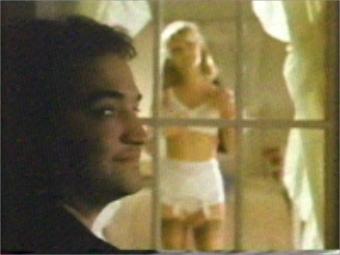
So, why do we read autobiographies and memoirs? And what does it matter if they contain falsehoods and made-up facts? These things certainly can spice up the drama and tension of an otherwise pedestrian story, I suppose. Maybe we read them for the "there but for the grace of God go I" instruction they offer; a feeling of superiority. Or, maybe—and this seems more likely—we read them for the lurid content of peeping into someone else's private life—kinda' like the reason some people watch Jerry Springer or Ricky Lake or Maury or whichever "Reality show" is the flavor-of-the-month these days: Voyeurism. And that salacious thrill is cheapened if they know we're watching and we actually catch them acting.

Listen to Two Silhouettes on the Shade